Pine Tree Honey
First harvest. Naturally runny.
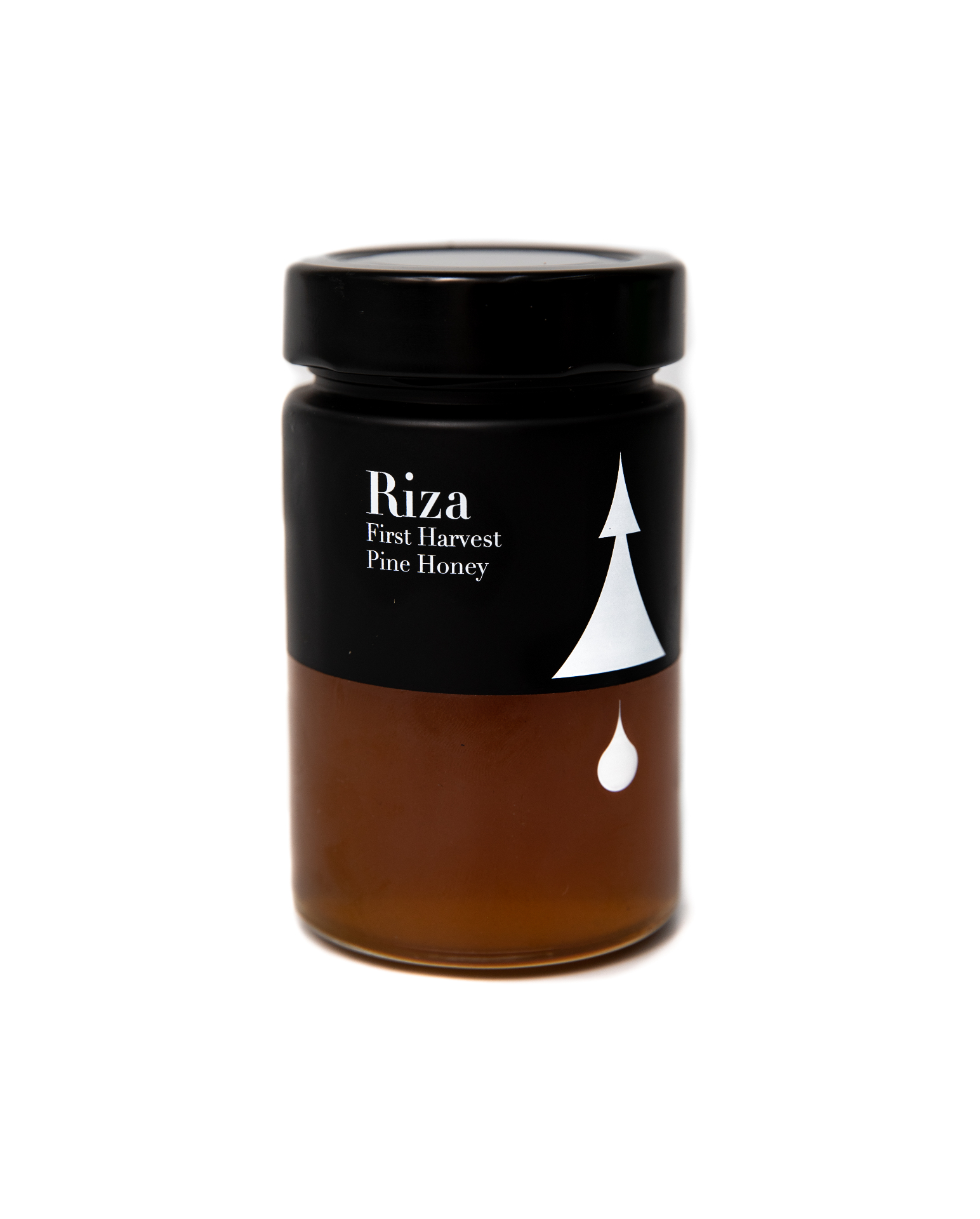
Our First Harvest Pine Honey is produced only in August on the island of Evia by Vasilis and Sotiris. The hives are placed in the pine forests at 400 metres for 30–35 days. Made from honeydew rather than flower nectar, it is raw, unfiltered, thick and light in colour, and it resists crystallisation.
250gr · Production: August
- • Raw & unfiltered
- • First August harvest
- • Single-origin Evia forests
Flavour Profile
What is honeydew?
Every drop of Riza honey is made by honeybees, from start to finish. What makes it different is where the bees forage.
Most honey begins as flower nectar. Ours begins in the forest. Tiny native insects feed on the sap of Greek pine and fir trees and leave sweet droplets on the bark and needles. This is honeydew. Our bees collect it just as they would nectar, carry it back to the hive, and turn it into honey in exactly the same way: adding their enzymes, fanning away the moisture and sealing it in wax.
The result is still 100% natural raw honey. It’s simply honey from the forest rather than the meadow, darker and deeper, and much rarer.
(Nothing to do with melons. We get asked.)
Read: Is honeydew honey real honey?FromHivetoJar
A patient process — followed for every jar of pine tree honey.
Placing the hives
Our beekeepers move the hives into the pine forests of Evia, at 400 metres, for just 30–35 days.
Honeydew
The bees collect honeydew from the pine trees, not flower nectar. This is what makes the honey thick and naturally less sweet.
Harvesting
Vasilis and Sotiris harvest once, at the end of August. There is no second harvest.
Jarring
Jarred raw and unfiltered, with nothing added.
To your table
Sold in small batches until the harvest runs out.
Tested, not just told.
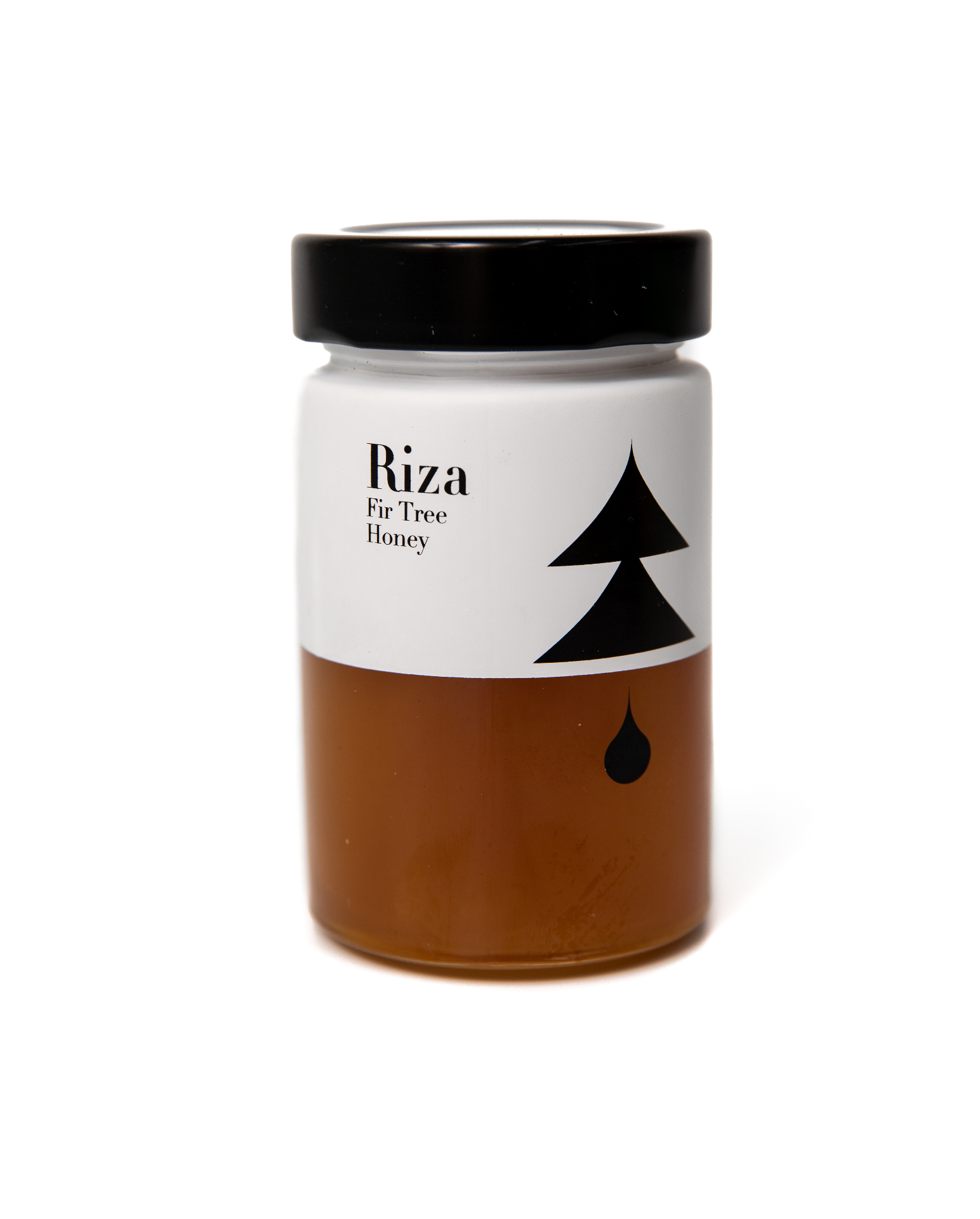
We sent our honey to an independent university lab. The results below are for our Fir Tree Honey; our Pine Tree Honey report is on its way.
Has it been heated?
Freshness (HMF)
1.6mg/kg
Legal maximum 40About 4% of the legal limit.
HMF is a natural compound that builds up when honey is heated or stored for a long time. Many commercial honeys are warmed so they pour and bottle faster. A reading this low means ours was never heated.
Are the bees’ enzymes intact?
Diastase activity
19.6DN
Legal minimum 8More than twice the legal minimum.
Diastase is one of the enzymes bees add as they turn honeydew into honey. Heat and over-processing destroy it, so a high reading is one of the clearest signs of honey left as the bees made it.
Was it harvested ripe?
Moisture
14.4%
Legal maximum 20%Well below the 20% limit.
Bees only seal a cell with wax once they have fanned the honey dry enough to keep. Honey taken too early holds more water, tastes thinner and can ferment. Low moisture means patience at harvest.
Is it really from the forest?
Electrical conductivity
1.28mS/cm
Honeydew threshold 0.8Confirmed honeydew honey.
Conductivity measures the minerals in honey, and it is how the law tells honeydew honey apart from flower honey. Above 0.8 means the bees gathered from trees, not flowers.
Why does it stay so smooth?
Glucose + fructose
47%
Flower honey: 60% or moreBelow the minimum for flower honey.
Honey crystallises when glucose comes out of solution. Ours contains less of these simple sugars than flower honey, so it stays runny for much longer.
Is it clean?
Residue screening
Nonedetected
Tetracyclines · not detected4 hive treatments · below reporting levelTested for antibiotics and common hive treatments.
Some beekeepers treat hives with antibiotics or chemical miticides, and traces can end up in the jar. Ours was screened for both.
Fir Tree Honey, 2023 harvest. Independently tested by the Laboratory of Apiculture-Sericulture, Aristotle University of Thessaloniki (accredited lab), report no. 12679. Results apply to the tested batch.
Legal limits: Council Directive 2001/110/EC, retained in the UK by The Honey (England) Regulations 2015.
Customer reviews
Buyers describe it as delicious, with a mild flavour, and one calls it the best honey they have ever had. Its texture and stylish packaging also come up, with one customer saying it makes a perfect gift.
Suzanne
June 2026 · Verified Amazon purchase · US
Great tasting honey
Delicious honey! Mild flavor. I enjoy it a lot.
Ana M.
January 2025 · riza.co customer
Really great honey, love the texture and taste and its stylish packaging/design makes it perfect for a gift too!
Maciej Swieboda
March 2022 · Verified Amazon purchase · US
The most excellent honey!
This is by far the best honey. The taste is without equal. I love honey and had a lot of different kinds, among all of them this is number one!