Is honeydew honey real honey?
By Stefania and Joy, Riza
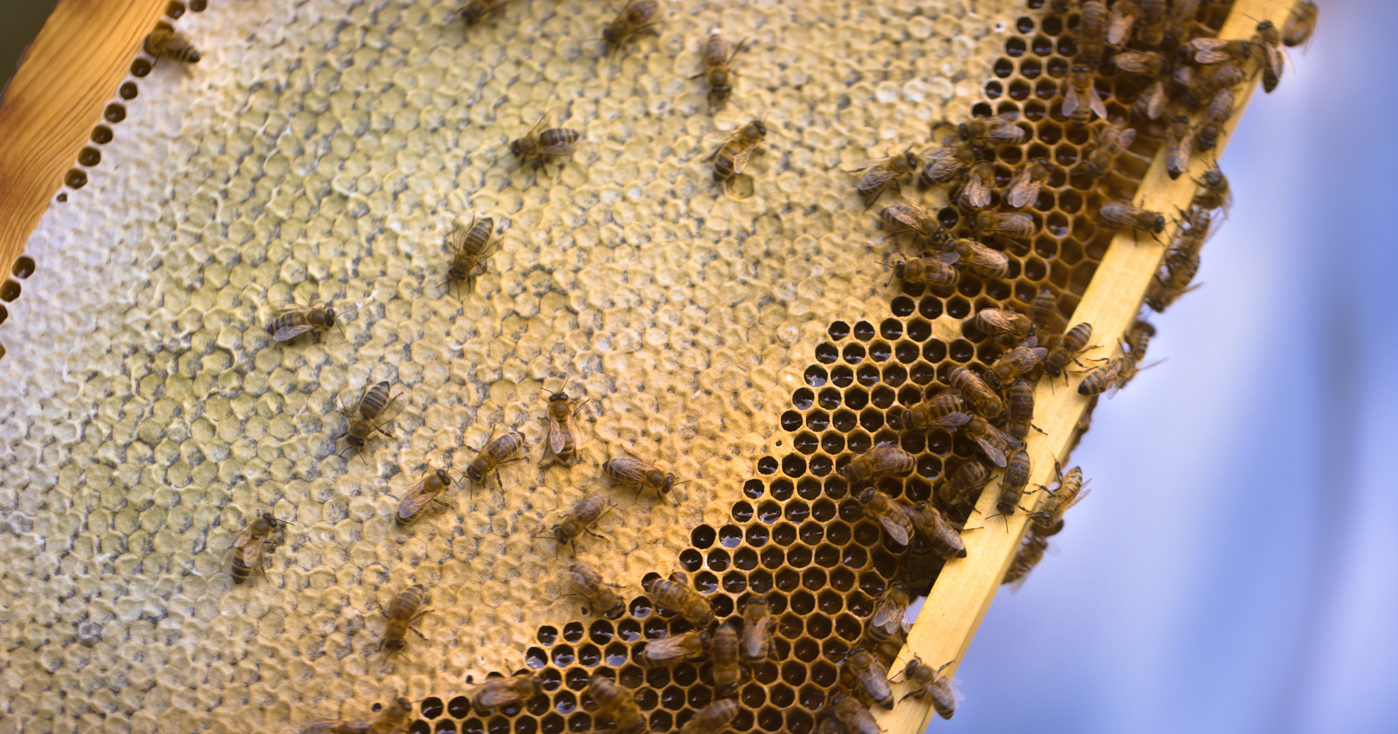
Yes. Honeydew honey is made entirely by honeybees, and UK and EU law define honey as what bees make from flower nectar or from honeydew. The only difference is what the bees collect: sweet droplets from trees instead of nectar from flowers.
What is honeydew?
Honeydew is a sweet liquid found on the bark and needles of trees such as fir and pine. Tiny sap-feeding insects drink the tree's sap and leave the surplus sugars behind as droplets. Bees gather these droplets just as they gather nectar from flowers.
Do bees make it the same way as flower honey?
Exactly the same way. The bees carry the honeydew back to the hive, add their own enzymes, fan their wings to evaporate the water, and seal the finished honey in wax cells. Beekeepers then harvest it as they would any honey.
Is it anything to do with honeydew melon?
No. The melon and the honey simply share a name. Honeydew honey contains no fruit.
How is it different from flower honey?
- Colour and taste: usually darker, with deeper malty, resinous or caramel notes and less sweetness.
- Minerals: naturally higher. The law requires honeydew honey to have an electrical conductivity of at least 0.8 mS/cm, a measure of mineral content. Our Fir honey tested at 1.28.
- Sugars: fewer of the simple sugars glucose and fructose, and more complex sugars such as melezitose.
- Texture: because it has less glucose, it stays runny far longer than most flower honeys.
Why is it rare?
Honeydew only flows when weather, trees and insects line up. Some years there is almost none. That's why our honeydew honeys are harvested once a year, in small batches.
FAQ
Is honeydew honey vegan?
- No more or less than any honey: it is made by bees.
Is it raw?
- Ours is. Our Fir honey's lab results show natural enzyme levels more than twice the legal minimum and almost no HMF, the markers of honey that has never been heated.
Which Riza honeys are honeydew honeys?
- Both: Fir Tree Honey from Mount Mainalo and First Harvest Pine Honey from Evia.
Sources: Council Directive 2001/110/EC relating to honey; The Honey (England) Regulations 2015; Riza Fir Tree Honey lab report no. 12679, Aristotle University of Thessaloniki (2023 harvest).