What is vanilla fir honey, and why is it PDO?
By Stefania and Joy, Riza
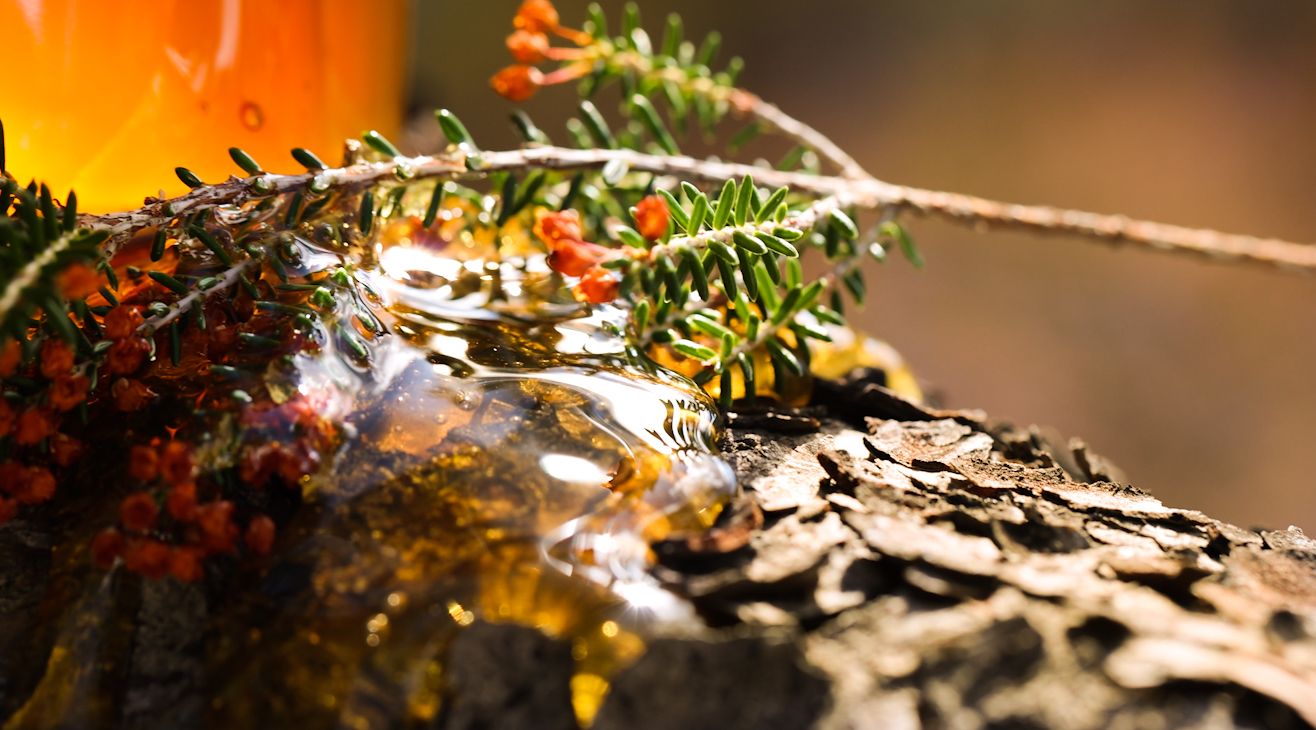
Vanilla fir honey is a rare Greek honeydew honey made by bees in the fir forests of Mount Mainalo in the Peloponnese. It was one of the first Greek honeys to receive Protected Designation of Origin (PDO) status, in 1996, so only honey from that area can carry the name.
Why is it called "vanilla"?
The name describes its look, not an added flavour. The honey has a pale, pearly, cream-to-caramel colour, which beekeepers liken to vanilla. Nothing is added: it is 100% honey.
Where does it come from?
From the Greek fir forests of Mount Mainalo in Arcadia. Our hives sit at about 1,100 metres, far from farmland. The bees collect honeydew from the fir trees rather than nectar from flowers. Read: Is honeydew honey real honey?
What does PDO mean?
Protected Designation of Origin is an EU and UK scheme that ties a food's name to the place it comes from and the way it is made there, like Champagne or Parmigiano Reggiano. For vanilla fir honey, the PDO means it must come from the defined area around Mainalo.
What does it taste like?
Thick and creamy, with hints of orange blossom and citrus and a caramel finish. It's less sweet than most flower honeys.
Why is it so rare?
The fir trees only give honeydew in good years. Our beekeepers harvest once a year, in July, and some years there is little or no honey at all.
Does it crystallise?
Very slowly. Because it is a honeydew honey with less glucose than flower honey, it stays smooth and runny for a very long time.
Sources: The three Greek honeys that are PDO (New Greek TV); Riza Fir Tree Honey lab report no. 12679 (2023 harvest).